
Choose the Right Ride
Educational guide — not medical advice. Follow clinician and facility orders. For emergencies call 911.
Families often book a bigger, pricier vehicle than needed — or underestimate help required. MG Medical Transport LLC is a direct local carrier (not a marketplace) operating ambulatory and wheelchair vans in Pflugerville, Austin, Round Rock, Travis County, Williamson County. This guide helps you describe the trip accurately so we assign the right vehicle and crew the first time — and you avoid paying for capacity you don’t need.
Definitions — How people use these words
Labels vary by state and company. Here’s how MG uses them in Central Texas private-pay NEMT.
- Ambulatory / sedan NEMT — Patient walks (with or without cane/walker), steps into a standard vehicle and buckles up. No lift. Lowest tier when safe and per orders.
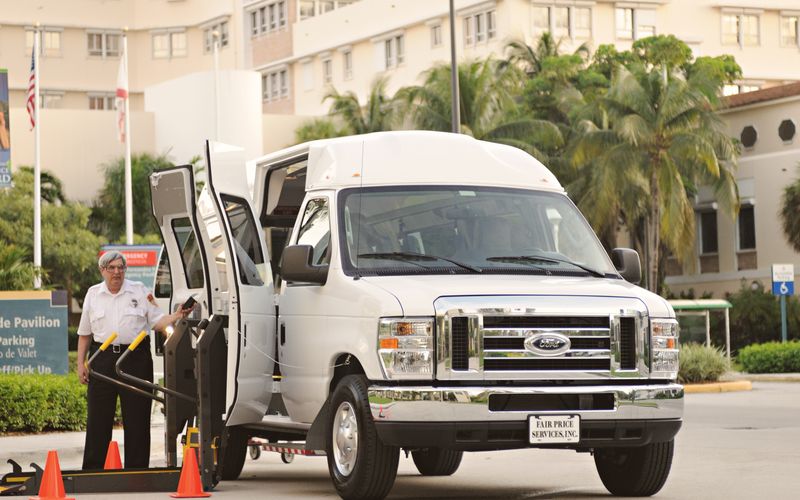
- Wheelchair-accessible van (often called “ambulette”) — Lift/ramp vehicle; passenger stays in wheelchair secured with 4-point tie-downs. MG operates this tier directly. Ambulette in many markets simply means this — not an ambulance — sometimes with first-aid-trained drivers, not ALS/BLS clinicians.
- Assisted / door-through-door — Same wheelchair van class plus hands-on help: gait belt, steadying, limited steps, escort from apartment door to curb. You pay for time and crew, not “clinical care in the van.” Must be pre-booked.
- Stretcher / gurney / bed transport — Patient must remain reclined. Different equipment/staffing/liability; highest ground NEMT tier. MG does not operate stretcher gurneys — we refer to licensed stretcher operators when orders require it.
- 911 ambulance (emergency or scheduled ALS/BLS) — When monitoring/intervention en route is required. If unsure, call 911 — do not book NEMT as substitute.
When a Wheelchair Van Is Usually Enough
- Clinician expects patient to sit in wheelchair for full trip.
- Chair-to-chair transfer with one helper or patient pivots with minimal assist.
- Pickup/drop are curb or lobby with elevator — no long flights of stairs.
- Typical for dialysis, clinic follow-ups, and many SNF discharges when orders say wheelchair transport.
If this matches, ordering stretcher or two-person clinical crews “just in case” often adds hundreds per leg with no benefit.
When to Add Assisted / Door-Through-Door
- Porch steps, narrow hallways, or long walk from unit to curb and patient fatigues easily.
- Cognitive impairment, fall risk, or post-anesthesia grogginess where family cannot safely bridge gap alone.
- Facility requires handoff at room door, not circle drive.
Assisted costs more than curb-to-curb but less than stretcher when sitting transport is appropriate. Describe stairs, hallway width, and whether caregiver unlocks home so dispatch assigns right crew count — surprise assist needs are the top reason for on-site upsells or cancellations.
Door-through-door vs curb: Escort inside is a different service class with different pricing/crew rules. Describe stairs, ramp, and distances honestly at booking.
When Stretcher or Ambulance Is Appropriate — And Our Limit
Stretcher NEMT is for patients who must stay flat or cannot sit for duration per documentation. It is the wrong tool if seated position is tolerable — van class, billing, and crew rules differ.
- If orders say stretcher, MG will refer you to a licensed stretcher operator rather than improvising with a wheelchair van.
- If mobility improves after rehab, ask clinician whether orders can update to wheelchair van — families sometimes save thousands/month on recurring dialysis/radiation shuttles.
- Sudden breathing problems, chest pain, stroke signs → call 911, not NEMT.
Common Over-Ordering Mistakes
- Stretcher when wheelchair + one assistant matches plan of care.
- Two-person assist without stairs/bariatric needs.
- “STAT”/after-hours language on routine appts that could shift to business hours.
- Round-trip minimums when one-way needed, or vice versa — ask how MG prices split legs.
- Private-pay premium before checking Texas Medicaid / Medicare Advantage NEMT — brokers slower but no out-of-pocket when authorized.
Under-Ordering — Risky, Not a Place to Save
- Patient cannot sit safely but family books sedan/wheelchair to avoid price — crew may refuse on arrival.
- Oxygen, suction, isolation not disclosed — wrong vehicle or no-show.
- Stairs/bariatric width hidden until pickup — delays, falls, re-dispatch.
How to Save Significantly Without Shortcuts
- Check Medicaid/Medicare Advantage/NEMT first — MG is private-pay backup when broker cannot meet timing/level.
- Combine appointments one day when clinically appropriate — one round trip vs multiple shorts.
- Book ~48 hours ahead; last-minute/weekend is harder/pricier. MG operates Mon–Sat.
- Be precise on vehicle level: wheelchair van < stretcher when stretcher not required — clinician guidance drives choice.
- Ask what quote includes: base, mileage, tolls, wait after grace period, after-hours, cancellation.
- If family can assist with transfers, say so — some trips price lower within safety limits.
- Ask wait policy: reduce paid hospital standby with clearer discharge ETAs or staged pickup.
- Recurring dialysis: ask about standing weekly schedule — MG offers it; not all do.
Largest savings come from matching modality to orders, bundling, and avoiding paid wait with honest ready times — not random cheaper vendors cutting insurance/training corners.
Booking Checklist — Works for Any Level
- Lock addresses/timing: Full street addresses, building/clinic name, entrance (main/ER/discharge bay), appointment start + expected duration for return leg.
- Mobility/access in one message: Wheelchair type (manual/power, width), stairs, stretcher vs seated, oxygen, bariatric, pivot vs full carry. Surprises at curb = re-quote/decline.
- Book both legs together: Round trips/discharge windows price better together. If return unknown, ask about “ready when cleared” window and wait policy.
- Buffer for traffic/parking/handoff: Urban hospitals need extra for valet/elevator. State hard window if any; note flexibility if it helps pricing.
- Confirm “door-to-door” meaning: Curb vs apartment door, stairs, elevator-only, escort rider.
- Get it in writing: Date, window, vehicle mode, total price/basis (base/mileage/wait/after-hours), cancellation terms. Keep screenshot/email.
Book with MG — or call (512) 669-3225.
Pitfalls That Erase “Savings”
- Vague pickup (“front of hospital”) without wing/tower/door — driver burns time.
- Forgetting bariatric/wide chair/oxygen until van arrives.
- Assuming insurance reimburses private NEMT — check plan first.
- Return too tight after procedures that run long — add slack or flexible callback.
Prepare Your Home for an Accessible Arrival
Door-through-door and wheelchair trips fail as often at threshold as on highway.
- Clear wide path from parking to bed/rest area; measure narrowest hallway/door vs chair width.
- Treat outdoors as same path: shovel/salt, trim branches, ensure lights, reserve space for lift/ramp; note gravel/steep grade.
- Secure pets behind closed door.
- Stage DME (bed, concentrator, commode) assembled/plugged, clear turning space.
- Bathroom: remove loose rugs, non-slip mat, ensure reachable towels; permanent grab bars via qualified installer/OT.
- Lights/temperature/noise: lights on, pre-cool/heat, lower TV so instructions heard.
- Apartments: confirm elevator dims for stretcher/wide chair, have fobs/codes, meet at agreed dock.
- One adult point person who knows full path and mobility limits.
- Meds/food/paperwork in one obvious place near rest area.
- If home cannot be made safe, tell case management early — SNF/stay/DME/home assessment beats unsafe carry.
After Dispatch — What to Expect with MG
- Confirmation ≠ “driver en route now”: You get booking confirmation first (date/level/price/cancellation); driver details may follow night before or morning of for same-day trips.
- Pickup window, not a minute: Scheduled around traffic/prior runs/discharge reality unless hard clock promised. Build buffer for pharmacy/paperwork/elevators.
- One phone live: Dispatch/driver calls when staging. If using hospital room phone, give mobile backup.
- Paperwork ready: Discharge summary, DME, meds, outerwear packed when floor says “ready soon”.
- Verify vehicle: Quick check company name/vehicle type vs confirmation; if off, call dispatch before boarding.
- Payment clarity before wheels roll: MG private-pay collects per confirmation or card link; brokered Medicaid trips bill program — don’t pay cash for those unless instructed. Ask receipt.
- If late: Use dispatch number on confirmation; have confirmation number ready. Document repeated issues for facility social worker.
- During ride: Follow securement/seat-belt instructions; wheelchair tied down, escorts sit where directed. Tell crew if symptoms change — may divert to 911.
- At drop-off: Someone meets patient; if door-through-door ordered, confirm how far inside crew goes.
- After trip: Save confirmations/receipts/driver card; note best entrance/chair dims/ideal window for next booking.
How Patients & Families Can Research Options
- Start with facility/plan case management, not random search ads.
- Read Medicaid/Medicare Advantage NEMT sections + member handbook/transportation rider.
- Align ride type with written mobility: “Can they sit full ride?” “Stairs safe with one assist?” Photo wheelchair spec plate if asked.
- Walk exact physical path at both ends (parking height, steps, gravel, codes) — mention oxygen/bed.
- Compare total cost not teaser rate (base/mileage/tolls/wait/after-hours/cancel).
- Check licensing/safety basics: USDOT/state carrier IDs where applicable, insurance, training claims (securement, CPR). Red flags: cash-only no receipt, no business address, pressure to skip written agreement.
- Plan for failure: backup contact, second choice; know facility policy if transport no-shows.
Sources & Further Reading
Educational summaries are not medical advice. Verify benefits, emergency thresholds, and clinical expectations with your care team.
- ADA guidance for transit providers — FTA
- Assurance of transportation (Medicaid overview) — CMS
- Older adult fall prevention — CDC
- Medicare coverage: ambulance services — Medicare.gov
Content adapted from public NEMT patterns and MedicalRide.org educational structure, rewritten for MG’s direct-carrier operations in Travis/Williamson County.
Ready to Book Your Medical Transportation?